Technicallblogging: February 2022

Pages

How to make money from WordPress

 Are you looking for the top ways to make money online that are NOT scams? WordPress is the largest publishing platform on the planet, and it powers over 43% of all websites.

You can use WordPress and blogging to earn money online by doing what you love. You can work from home, at your own time, and there is no limit on how much money you can make.

In this article, we will share top “proven” ways to make money online blogging with WordPress.
Ways to make money blogging with WordPress

First, a word of warning: these aren’t ‘Get rich quick’ schemes. If you are looking for a way to get rich quick by making money online, then you’re in the wrong place.

Don’t be fooled by the pictures of expensive cars, mansions, or working from the beach. Every single one of them is a scam, and you will waste your time and money paying for any courses or training that you buy from those guys.

Unlike other “make money online” articles, this is a comprehensive guide on how to make money at home legitimately, using blogging and WordPress.

Many of these methods require some investment of time and/or money to get started. As long as you’re willing to put in the effort, you’ll reap the reward.

Before you can start using any of these methods, you’ll need to have your own self-hosted WordPress blog. We have a step by step guide on how to start a WordPress blog for beginners.

The process is really easy to follow whether you are 20 years or 60 years old. However, if you need help, our expert team can help you set up your blog for free. → Click Here to Get Your Free WordPress Blog Setup! ←

Once you have set up your blog, then you are ready to follow this guide.

Monetize Your Blog Content
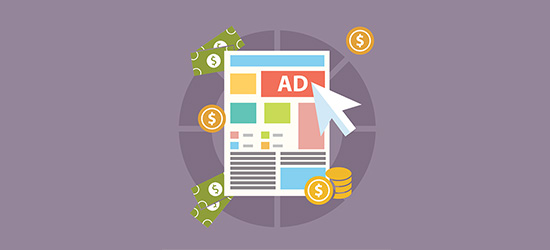
you can make money online with advertising

When you think of how to make money blogging, advertising is often the first thing that comes to mind.

Yes, it is possible to make money with ads on WordPress, but there are also other ways you can monetize your blog content. Here are a few methods that work:

1. Make Money With Affiliate Marketing
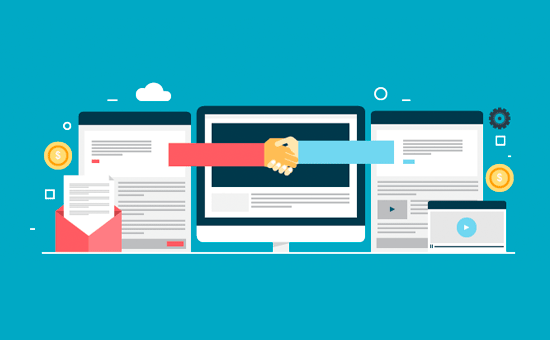
Making money online using affiliate marketing

Affiliate marketing is when you recommend a product or service to your audience using special tracking links, and then get a referral commission for every time someone buys after clicking your link.

A real-life example of affiliate marketing would be when you help a friend open a bank account at your bank branch. Usually, they give you a gift card or a bonus of some sort.

Similar to that many products and services online have affiliate programs that you can join. There are affiliate programs available for every industry (niche).

If you’re interested in getting started with affiliate marketing, you can start by thinking about the products you already use that your readers may be interested in as well. Then you can see if they have an affiliate program that you can sign up for.

You can find a huge list of products to promote from:

Once you have selected the products to promote, then you can use a WordPress plugin like PrettyLinks to manage your affiliate links.

It allows you to quickly insert links into posts, create branded links, auto-replace keywords into links, and even see how each link is performing on your site.

Affiliate marketing is the easiest way to make money because you can promote a wide-variety of products. Just about every popular store like Walmart, BestBuy, Amazon, and others have an affiliate program.

To learn more, see our beginner’s guide to affiliate marketing and also check out these affiliate marketing tools and plugins which will help you increase your earnings.

2. Display Google AdSense on WordPress
Display Google AdSense Ads on your blog

Google Adsense is an easy way to make money from your blog. All you need to do is add a script from Google to your website and start displaying ads.

You will get paid for every time a user clicks on the ad. These are called CPC ads.

What is CPC? CPC stands for “cost per click.” By displaying CPC ads with Google Adsense, you receive a set fee every time a visitor clicks on an ad.

The cost per click is set by the advertiser. (This is in contrast to CPM ads, where you’re paid for ad views instead of clicks. CPM means “cost per thousand impressions,” where M is the roman numeral for 1,000.)

Google Adsense is a good way to start earning money online when you are first starting out.

You can see our guide on how to monetize a WordPress blog with Google AdSense to get started, and this tutorial on how to optimize your AdSense revenue for more tips.

Looking for a Google AdSense alternative? Try Media.net. They also have a large pool of advertisers, and their payouts are good.

3. Use a WordPress Advertising Plugin to Sell Ads Directly

Sell ads directly

Google AdSense is easy to set up, but the amount of money you can earn is limited. Each ad click earning will vary.

Directly selling banner ad space on your website can be more lucrative. Instead of having to rely on an intermediary who takes a cut of the money, you negotiate the price and terms on your own.

Above we mentioned the difference between CPC and CPM ads, where you are paid per click or per thousand views. While you could use one of those models for selling banner ads, most bloggers charge a flat rate instead. Charging a flat rate is easier than keeping track of views or clicks.

Still, directly selling ads takes more work to manage than using Google AdSense. Instead of just adding a bit of code to your website, you’ll have to negotiate the pricing, come up with an agreement and terms, and take care of administrative work like invoicing.

However, using a WordPress ad management plugin can make the process easier. We recommend using AdSanity, it allows you to manage Google AdSense as well as your own ads.

To learn more, see our guide on how to sell ads on your WordPress blog.

4. Sell Sponsored Blog Posts

Some bloggers aren’t interested in displaying ads to their audience and wonder how to monetize a blog without ads.

With ad networks, you lose some control over the content displayed on your site. Some readers will get annoyed or offended by ads, and more and more people are using ad blockers which affects your earning potential.

An alternative way to monetize a blog is through sponsorships.

A sponsorship works just like it does in sports, TV shows, or other industries. Basically, a company pays you to represent their product, talk about it, and promote it to your readers.

To get started, it’s a good idea to put together a one-page media kit that details your traffic stats, social media following, audience demographics, and any other data that will make your site more appealing to advertisers. Then, you can approach companies to negotiate a sponsorship deal.

When publishing sponsored posts, it’s crucial to know about the laws in your area about disclosure.

For example, in the United States, a blogger who publishes a sponsored post must comply with the FTC’s Endorsement Guides. This includes disclosing whenever a post is sponsored. You can do that by adding a sponsored post prefix to your post title in WordPress.

5. Get Paid to Write Reviews

Writing paid reviews

Similar to sponsored posts, you can also make money by writing paid reviews on your site.

This is a slightly different monetization method than a review site with affiliate links, as mentioned above.

Instead, you get to try out products related to your niche for free, and even get paid for writing a review.

The process for doing this can be similar to getting sponsored posts. You’ll want to review products that are relevant to your niche, that your audience would be interested in.

You can approach companies on your own to ask about doing paid reviews. There are also websites like PayPerPost that can help to connect you with businesses who may be interested.

6. Earn Money Online by Flipping Websites
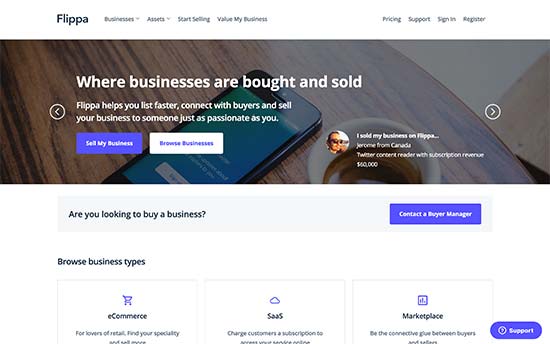
Flippa

If you know how to build a WordPress website, then you’re way ahead of most people. Sometimes entrepreneurs like to buy already established websites that they can use for their own businesses.

If you can build a WordPress blog and start getting traffic to it, then you can sell it and make money for your efforts.

This requires knowing the type of websites in demand, and how to price and sell them. There are websites like Flippa that serve as auction sites and brokers for selling websites.

What are WordPress Plugins

 In WordPress, a plugin is a small software application that extends the features and functions of a WordPress website.

Plugins play a major role in building great websites using WordPress. They make it easier for users to add features to their website without knowing a single line of code.

There are over 50,000 free plugins available in the WordPress.org plugin directory and thousands of premium WordPress plugins written by third-party developers like ourselves.

What is Plugin

What Are WordPress Plugins?

WordPress plugins are apps that allow you to add new features and functionality to your WordPress website, similar to the way mobile apps do for your smartphone. There is a popular saying in the WordPress community, ‘There’s a plugin for that.’

WordPress is designed so that other developers can add their own code to it. The WordPress plugin API offers a robust set of hooks and filters which allow developers to modify existing WordPress functionality or add new functionality.

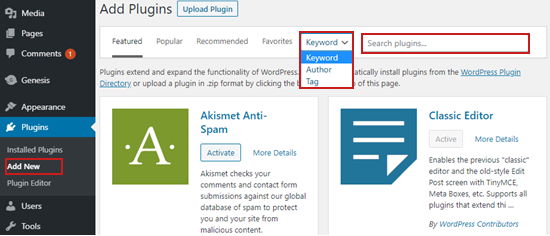
You will find your plugins on the Plugins » Add New page in the admin sidebar. Here you can activate and deactivate your existing plugins and install new ones.

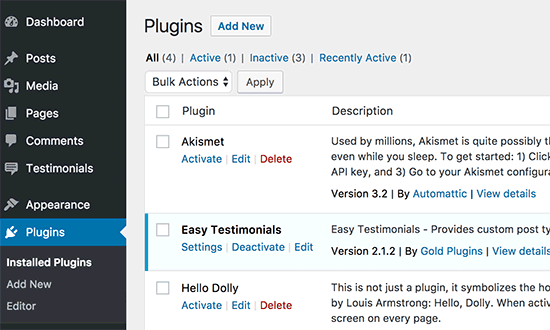
Installed WordPress plugins

How to Install a WordPress Plugin

You can easily find and install a WordPress plugin right from the Plugins » Add New page in the admin sidebar. From there, you’ll see the WordPress plugin repository where you can browse or search for the plugin you need.

Download Plugin

Once you find the plugin, you want to install and click on ‘Install Now’ and wait for the installation to complete. Once the installation has finished, you need to click on ‘Activate’ and your plugin will be ready to use.

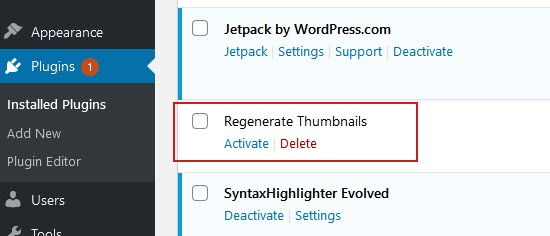
As a site administrator, you can also configure plugin settings, deactivate them, or remove the plugin from your WordPress website by deleting them.

Activate Deactivate Settings Plugins

As your site grows over time, you may have plugins on your site that you don’t need anymore. It’s important that you uninstall those plugins correctly to improve your site’s performance.

How to Update WordPress Plugins

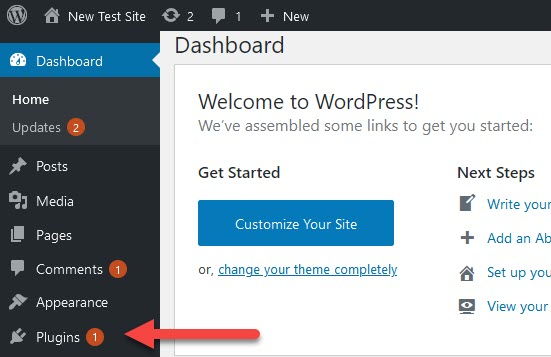
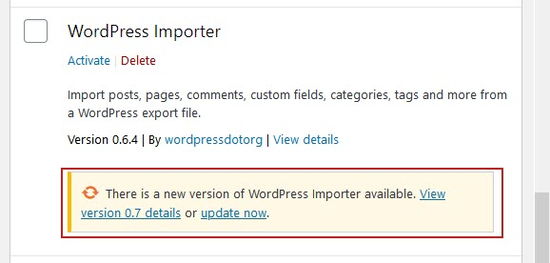
Good developers will update their plugins frequently, and when they do you’ll see a notification in your admin toolbar and admin sidebar.

Plugin Update Notifications

When you receive an update notification, you need to click on the icon and this will take you to the ‘Updates’ page. You’ll also see other updates like WordPress core or themes will also appear on this page.

Once you have the tools you need, you can follow our step by step beginner’s guide on how to create your first WordPress plugin. Or, if you’d prefer to create a plugin without using any code, then you can create a plugin using a plugin.

Once you’ve created a WordPress plugin, you can add it to the WordPress Plugin Directory so that others can discover and use it.

Are WordPress Plugins Safe?

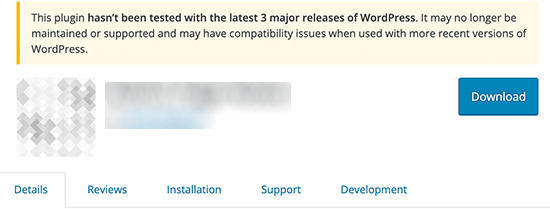
Safety is never guaranteed. Some plugins may be poorly coded, and others may conflict with one another plugin or with your theme. Hackers can also use poorly coded WordPress plugins to cause problems on a website.

That’s why it’s important to choose a plugin only from reputable plugin repositories or third-party plugin creators that you trust.

Luckily, you can learn a significant amount about a plugin before you install it on your website, and we list some of the things you should look for when choosing a plugin in the next section.

An abandoned plugin

You can also keep your website secure by using a WordPress security plugin like Sucuri, which scans thousands of websites and allows for quick detection of security problems with plugins and protects your overall website security.

If you are concerned about slowing down your website by installing too many plugins, then you should check our guide on how many WordPress plugins you should install. Here we explain how plugins affect your website and show you how to choose the right combination of plugins.

Update plugin now

For more details read our step-by-step guide on how to properly update and manage WordPress plugins.

You might like to enable automatic updates for minor updates of the plugins you trust and rely on. If you do, then you should check our guide on how to better manage automatic WordPress updates.

How to Create a WordPress Plugin

To create a plugin, you need basic knowledge of coding languages like PHP, CSS, HTML, and JavaScript. You also need a local development environment for Windows or Mac to test your WordPress plugin on your computer.

You will write your code in a plain text editor. Notepad or TextEdit will work fine, but if you want to try something more advanced, then check out these code editors for developers.

How to Choose the Right Plugin

With thousands of WordPress plugins available, choosing the right plugin can seem overwhelming. There are many plugins that can accomplish the same task, and some are coded better than others.

Free Plugins

If you’re just getting started in WordPress or you are on a limited budget, then free plugins can be a great place to build your WordPress website.

As your website grows, you might replace some of your free plugins with premium ones offering better support and compatibility with your website.

Here are some questions you should ask when choosing a free plugin:

  • How long has it been since this plugin has been updated?
  • Is it compatible with the latest version of WordPress?
  • Are people getting answers to their support questions?
  • How do other users rate the plugin?

You can learn more about choosing a free plugin in our guide on how to choose the best WordPress plugin.

Premium Plugins

Premium plugins are paid versions of WordPress plugins that come with additional features, priority support, documentation, and regular updates. These are important considerations as your business grows.

In our guide on when it’s worth buying premium WordPress plugins we help you think through the issues of how and when you can start switching to premium plugins.

What are wordpress theme


What Are WordPress Themes

As a new WordPress user, you may be excited about customizing your site. You may even have a mental picture of what your finished site will look like. However, if you lack design or coding experience, fulfilling your vision may be a daunting task.

Fortunately, themes are one of WordPress’ more inherent and useful features — they enable you to customize your site’s appearance and even incorporate additional functionality. In fact, with the right theme, you can customize your site to your exact specifications with (in many cases) no coding or design experience required.

An Introduction to WordPress Themes

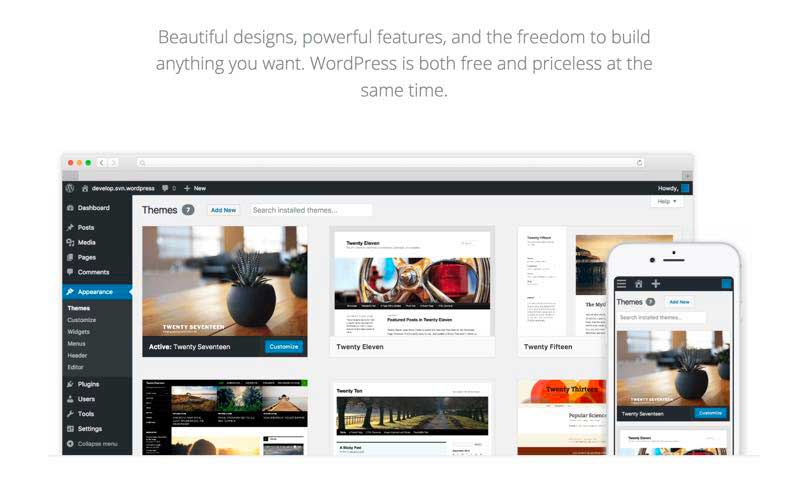
WordPress Theme Options

A WordPress theme is a group of files (graphics, style sheets, and code) that dictates the overall appearance of your blog or website. Themes can control something as vast as your site’s layout, or as minute as your hyperlink colors. It’s easy to think of a theme as a ‘skin’ for your site, but they are much more powerful than that.

Rather than simply providing a look and feel for your blog, a theme enables you to control the presentation of your site. For example, let’s say you blog about food, but you also have an online store. The right theme can display your blog posts in a certain way while offering a completely different layout for your store’s pages.

Themes are an inherent part of WordPress. In fact, the platform includes a number of themes out of the box. However, there are a few reasons why you may want to choose and install a fresh theme on your site:

To improve your site’s visual appeal. If you have a specific vision for your site, you can choose a suitable theme and customize it to meet your requirements. To enable more design customization. If you have no design or coding experience, many themes offer a wealth of customizations to help you create the right design. To implement additional functionality. Depending on your needs, a theme may include functionality related to your niche that can’t be found elsewhere.

While the default or a customized version of a theme can work for plenty of websites, there are actually thousands of themes available to choose from, covering specific niches and purposes. Let’s discuss this in more depth now.

Multipurpose vs. Niche Themes

In short, there are two loose categories of themes. First, a multipurpose theme caters to a number of different niches and site types. They usually include multiple kinds of pages, extensions, codes, widgets, and tools to provide more options for customizing your site, regardless of its focus.

While niche-specific themes are also customizable, they’ll often be tailored to one specific topic or industry. They won’t include as much scope for customization as multipurpose themes, but the refined functionality will usually be laser-focused on the exact requirements you’ll have for your site.

For the most part, there is no right or wrong answer when it comes to choosing your WordPress theme. However, it is important to ascertain your requirements before making a choice — and your budget is one of those elements.

Free vs. Premium WordPress Themes

Before we talk spending money, it’s important to know that there are plenty of high-quality WordPress themes that don’t cost a penny. We’ll get to where to find them later, but the themes found in the WordPress.org Theme Directory must pass a rigorous review process in order to be included. This assures quality and leaves you to opt for a theme purely on design, functionality, and user reviews.

However, there are drawbacks to free themes. For starters, support is usually minimal. Many themes offer support through dedicated forums, usually leaving you to carry out the solution. What’s more, updates can be more ‘ad-hoc’, depending on the developer’s priorities.

While they’re developed in the same way as free WordPress themes, premium solutions are a different beast. You’ll often find support and updates are vastly improved, along with increased features and functionality. However, you’ll find this requires a regular subscription depending on the developer. Of course, this cost is justified if you believe you’ll need regular support and updates — and we’d recommend keeping your theme updated to make sure it’s safe and secure.

Ultimately, choosing a free or premium theme will always be based on your unique requirements. If you have the time and expertise, along with a minimal budget, a free theme could be ideal. However, in most cases, a premium theme will likely be your best option, given the vast number available.

2 Quality Places to Find WordPress Themes

As we briefly alluded to, there are a wealth of places to find WordPress themes, covering all manner of budgets and niches. Let’s discuss two of them, starting with one we’ve already mentioned.

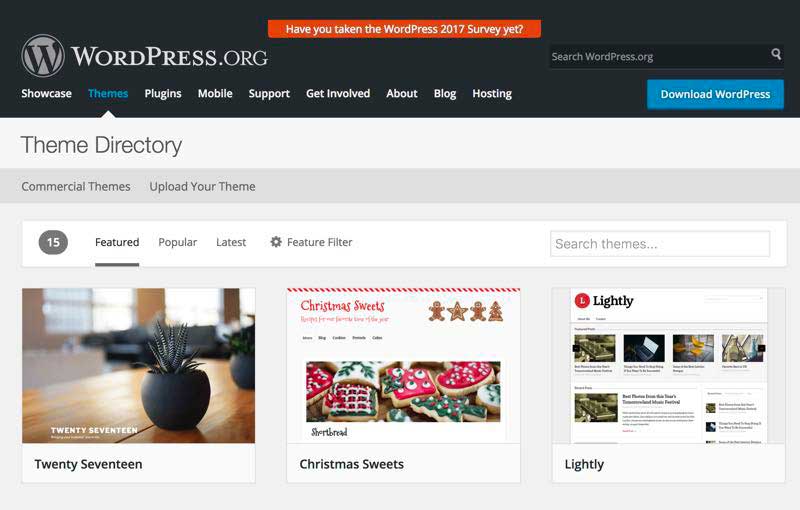
WordPress Theme Directory

1. The WordPress.org Theme Directory

The WordPress Theme Directory is the official repository for free WordPress themes. You can access this via the web, or alternatively peruse it from your WordPress dashboard. All of the themes have been manually checked via a stringent review process before being listed. As such, we recommend you start here when looking for a budget-friendly new theme.

For each theme, you’ll be able to access information that can help you make an informed choice. For example, you can see how many active installations a theme has, check when it was last updated, read customer reviews and ratings, as well as access the theme’s support forum.

In addition, you can preview the theme directly from its listing using default data (and also using your actual site content if browsing within WordPress). For a fuller live demo, you’ll often find a link to the developer’s website. This gives you chance to see the theme in action, although installing a theme on a test site of your own carries minimal risk.

Finally, downloading and installing themes is a piece of cake, especially when doing so directly within WordPress.

2. Directly From WordPress Theme Developers

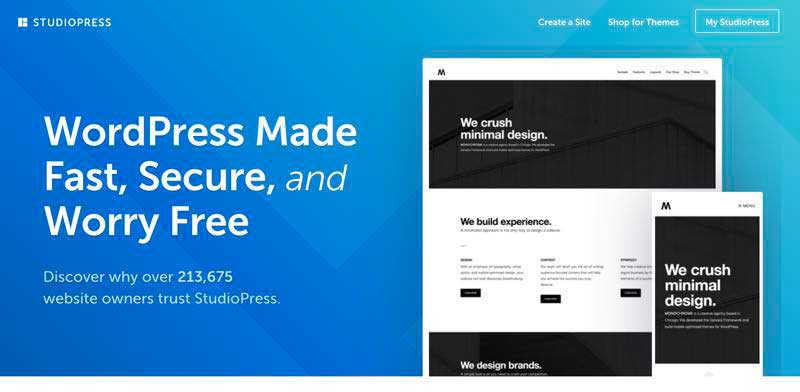
StudioPress Homepage

If you find the prospect of going through a large directory daunting, you can always go directly to the source. Many WordPress theme developers sell their work directly, although you’ll need to carry out your own quality checks. Here are two we recommend:

  • StudioPress is the developers of the Genesis Framework. They offer a wide variety of premium child theme options, covering a number of niches and designs.
  • Theme Hybrid offers a variety of free and premium themes. This is a membership site that provides different layers of support and theme options based on the subscription you choose.

While both of these platforms offer a variety of theme options, there are other sources you may want to consider. For example, WooCommerce offers the Storefront theme. This is a dedicated e-commerce theme designed to work fully with the WooCommerce plugin. Usually, carrying out an internet search for a theme in your particular niche will bring up a plethora of options to choose from.

If you’ve search high and low for the right theme but didn’t find one that matched your vision, you can also directly hire a developer to create a custom theme. Custom theme development is, of course, more expensive than opting for “pre-packaged” premium theme.

How to make a wordpress website

What is a WordPress Website?

WordPress is a free and open-source CMS (content management system) written in PHP and paired with a MySQL/MariaDB database. In simplest terms, WordPress is a free and open platform, a website builder, where you can make simple and easy websites for your businesses and blogs.

There are a lot of features on WordPress, including the templates where you can just plug in your information and create a website, plugins, add-ons, different themes, and much more.

There are other ways to make websites, but WordPress has always been the most popular and most used open-source platform for creating websites. Wondering why so many people choose WordPress over any other platform? 

Why Choose WordPress to Make a Website? 

Although WordPress was first designed as a platform for blogging and related publishing, it is now a platform on which one-third of all internet sites are based. This is thanks to the multitude of advantages WordPress has for website owners, such as:

Flexibility and Adaptability

You can do almost anything on WordPress, ranging from small businesses to eCommerce stores. Whatever you choose to do, WordPress will be adaptable to it.

User-Friendly

A WordPress site can be up and running in a matter of a few minutes, even if you don’t have any technical expertise. All you need is a domain name and web hosting account. 

Themes and Plugins

While WordPress themes offer you a wide range of choices in the appearance and functions of your site, plugins are the specialized functions that cater to specific needs of your website, such as shopping carts, contact forms, galleries, and more. 

High Ranking 

Since WordPress sites are so great in numbers and regularly update content, they include plugins and a variety of tools that help them create scheduled and optimized content – they often rank higher than websites that aren’t made on WordPress.

Apart from these advantages, people have even more reasons to choose WordPress, including the fact that WordPress sites are mobile-responsive, have a built-in blog, and offer great customer service.

Now that you’re familiar with the advantages of a WordPress website, you should also know not to mistake WordPress.com with WordPress.org – both are different. Learn more below.

WordPress.org vs WordPress.com – Which One to Choose?

People often mistakenly believe that .org and .com are the same WordPress. 

WordPress.org is when you host your site on WordPress, which means you have complete freedom of change and customization of web design – it’s recommended if you are familiar with how WordPress works. You can get the most customizable website builder when hosting your own site. 

On the other hand, WordPress.com is when WordPress.com takes care of your website for you, including the hosting. That way, you have less freedom in your web design. However, it is easier and simpler – recommended if you’re a newbie.

Now that you know the background of WordPress and how easy it can be for you to make a website, let’s learn how to build a WordPress website.

How to Build a WordPress Website

There are ten easy steps to getting started on WordPress. Simply follow these, and you’ll be up and running in no time at all.

Step 1: Define your site.

Before you do anything involving WordPress, you need to pick your niche. Trying to develop a WordPress website about something that’s been done 10,000 times isn’t going to be beneficial. If your WordPress site isn’t for an existing business, make sure you pick a topic that genuinely interests you so it won’t feel like a chore to update your site now or months down the road.

Step 2: Choose a domain name.

Your domain name should relate directly to the niche you chose in step 1, and it should be a name that’s so easy for users to remember that they never forget it. Doing some keyword research can also be helpful. Stuck on a particular name, but .com is taken? Try .net or .co.

Step 3: Get web hosting.

Your next step is to find a reliable web host to handle your site. Here at HostPapa, we offer industry-leading servers and infrastructure. Our multilingual customer support is available via chat, email, and telephone; we also maintain an extensive knowledge base and video tutorials. What about a shared vs. dedicated server? 

Shared web hosting will be just fine in most cases, and it’s very popular with WordPress users. 

Step 4: Install WordPress.

At the risk of stating the obvious, once you’ve found your web host and domain name, it’s time to install WordPress and get up and running. At HostPapa, installing WordPress is incredibly easy and takes just minutes with our Softaculous script installer.

Step 5: Choose your WordPress theme.

Next, you need to decide on a design theme for your WordPress site. Thousands upon thousands of themes are available, ranging from absolutely free to upwards of hundreds of dollars. When selecting your theme, try to ensure that it makes sense for both the topic of your site and the layout and content you plan to publish.

Among WordPress theme premium WordPress theme choices, you’ll find a set of ready-made options for various topics. These include business, services, beauty, fashion, photography, education, food, and many others. Each of them can become an excellent base for the site that you have always dreamed about.

One of the most popular WordPress premium themes is Monstroid2 – a very lightweight multipurpose theme with a drag-and-drop builder.

Step 6: Install WordPress plugins.

A WordPress Plugin is a program written in the PHP scripting language that adds specific features or services to a WordPress website. WordPress plugins provide a great deal of customization and flexibility to your WordPress site, as well as valuable features and tools for your visitors. 

You may not start with many plugins, but the longer you use WordPress, the more you’ll find to benefit your site. Some of our favourites include JetPack and Yoast SEO. You can find the option of Plugins from your WordPress admin dashboard.

Step 7: Complete your administrative pages.

Important pages include your contact page, about page, privacy, and disclaimer page. Get these out of the way before you focus on adding content to your site – after all, it’s easier to add them now than later, when you’re done publishing all of the other, more exciting stuff! These pages also serve to protect both you and your site visitors.

Step 8: Publish your WordPress site.

After you get the important administrative pages published, it’s time to start adding interesting content. Whatever your niche, you want to make sure you include plenty of quality content for your readers. Make your pages visually rich, and further, make it a priority to keep adding new content regularly. If blogging, add at least one image to every post. Not only does this give your readers something to share on social media, but it also makes your content more appealing. Whether you decide to add content daily, weekly, or monthly, creating a content calendar will help keep you on the right track.

Step 9: Don’t forget marketing!

Marketing your new site is a two-fold endeavour. First, SEO (search engine optimization): make sure your pages have relevant keywords in the title, description, and body text. Second, take the time to promote your site in any way possible. Free options include using social media sites forums and emailing a regular newsletter. You may also consider guest posting and commenting on blogs, forums, and communities to build your social connections and link popularity.

Step 10: Back up your site.

Your content is your most valuable asset, so make sure you back up your site! For your blog, that means backing up your content in case of a crash, so you won’t have to start all over again. If you don’t back up posts, plugins, and affiliate links, it might take you a while before getting back on your feet. If you don’t have time to back up your site regularly, your web host should offer an alternative. HostPapa, for example, offers a terrific automated website backup service that takes just a few minutes to set up – no need to worry about backing up your site ever again!

Apart from that, costing is one factor that keeps many people on the fence about creating a website. Although we initially mentioned creating a website on WordPress – which is true because WordPress is free if you don’t opt for additional premium services.

There you have it – WordPress in ten easy steps!

What is bitcoin and how to get it